
‘Hopefully I’ll make it.’
Before coaching the USA men’s hockey team to a gold medal, and before his two Stanley Cup titles, Mike Sullivan was a kid from Marshfield, Mass. with a furious competitive fire. I know…I was there.

“I was psyched. It’s a great feeling. All your hard work and effort finally pays off.”
~Mike Sullivan, 2026 USA Men’s Hockey Coach
Last time we talked, that’s what Mike told me.
No doubt, the sentiment mirrors his spirit last Sunday, on the heels of Team USA’s Gold Medal-winning overtime thriller against Canada. But it’s not when I heard him utter those words: that came back in June 1987, when we were both in between our first and second years of college and we chatted by phone.
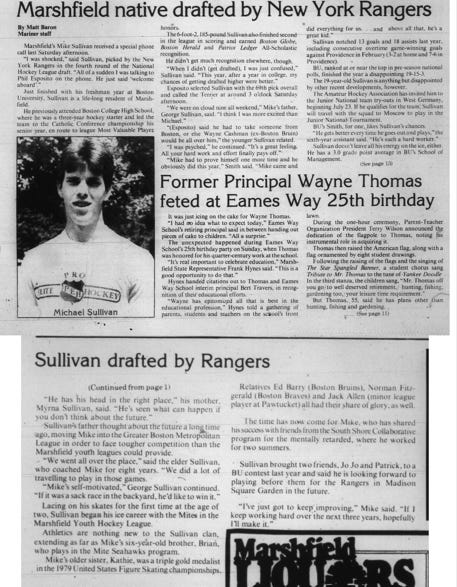
I was writing for the Marshfield Mariner, the newspaper I began writing for three years earlier as a 15-year-old. Mike was reflecting on his emotions when hockey legend Phil Esposito called him a few days earlier to say he’d been drafted by the New York Rangers in the fourth round, the 69th player selected overall.
Mike and I both grew up in Marshfield, Mass., never friends, but also hardly strangers. Our moms were not close pals but friendly—I forget how their connection came about—and my foremost memories of Mike are, aptly enough, in the athletic arena: basketball and baseball. I never saw him play hockey.
One memory on the YBA basketball court around the age of 11 looms largest: we were playing at Furnace Brook Middle School one Saturday morning, on opposing teams, when Mike stepped over the lane too soon as one of my teammates, Tim Anderson, was shooting a free throw.
The ball dropped in but the referee negated the point and made Tim try the shot again. He missed.
The official's decision was a ridiculous blunder that made zero sense to me and my teammates at the time. And it makes even less sense today. Why should my squad get be penalized for an opponent’s transgression?
To make matters worse, the game ended in a tie, likely because they had to keep the full slate of games on schedule. But it’s the only basketball game in my entire life that I can ever recall ending in this “kiss your sister” fashion.
Maybe that was Mike’s influence too, since a tie is such a hockey thing…and he was already a standout youth hockey player by that point.
Turning the calendar back to June 1987, the words that I chose to end my story were cliched—trite, but true too:
“I’ve just got to keep improving,” Mike said. “If I keep working hard over the next three years, hopefully I’ll make it.”
That’s pretty much how it played out.
He played another three years at BU, captaining the team his senior year and after a year in the minors, he broke into the NHL with the San Jose Sharks in 1991. Over the next 11 years, he played in over 700 games—never a star, but someone who stuck. His longevity exceeded all but one of the third-round draft choices picked in front of him, all but four of the second-rounders, and all but nine of the first-rounders.
In short, Mike continued to demonstrate the tenacity and competitive fire that I remember so well from our childhood. Although he played for four NHL teams (including our hometown Boston Bruins for a year), he never did suit up for the Rangers. But they finally brought him into the fold when they hired him last year to be their coach.
As impressive as it is to last for 11 years as an NHL player, Mike’s biggest mark has been as a coach. After two seasons coaching the Bruins shortly after his playing career ended, he served in a variety of roles over the next decade, culminating in the 2014-2015 season with the Stanley Cup-champion Chicago Blackhawks when he was player development coach.
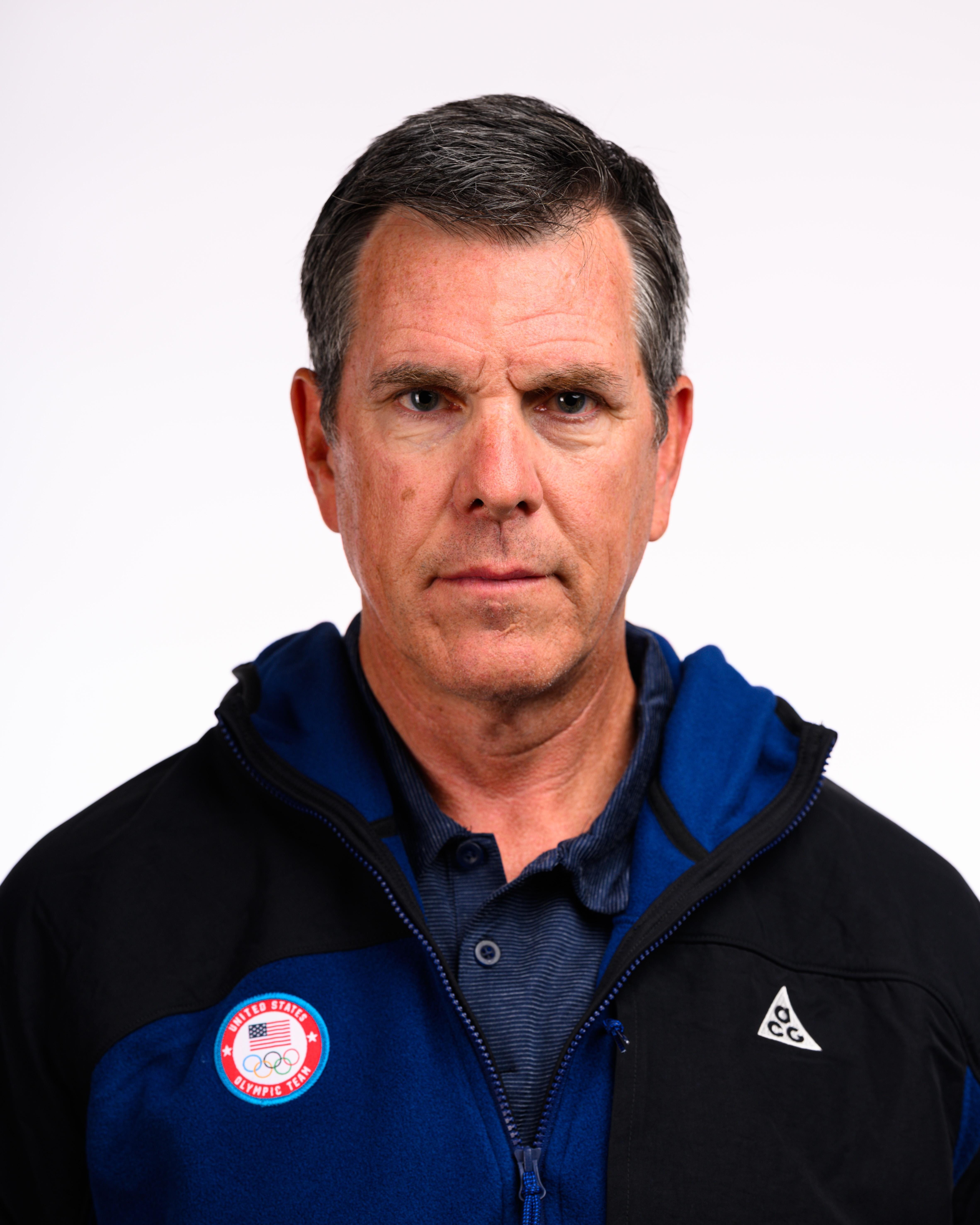
The next season, Mike took the reins of the Pittsburgh Penguins about one-third the way into the campaign and promptly guided them to back-to-back championships.
In fact, he’s the answer to two sports trivia questions:
Who’s the only American NHL coach to ever win two Stanley Cup titles?
Who’s the only American NHL coach to ever win two Stanley Cup titles who stole a youth basketball league victory with a lane violation?
Even though it seems I’ve not quite gotten over the injustice of that YBA tie, congrats, Mike, on all your success!
About That Ancient Story…
Yesterday, for the first time in decades, I re-read the front-page article on Mike’s big draft moment. (Thanks to Ventress Memorial Library staffer Thomas Cabral-White for tracking down the story from archives there and sending it!)
Some observations:
I was delighted to see that I spoke with both his parents, George and Myrna, as well as one of his college coaches. “One-source stories” are limited, and think I had Mike hand the phone to mom and dad, a sort of three-for-one deal.
My favorite quote came from his dad: “Mike’s self-motivated. If it was a sack race in the backyard, he’d like to win it.”
And his mother provided the ultimate mom one-liner: “He has his head in the right place. He’s seen what can happen if you don’t think about the future.”
Seems like she was addressing Mike, through me—sort of how coaches sometimes impart messages to their players through reporters.I had forgotten about all the sports coursing through the family bloodlines.
I reference Mike’s older sister, Kathie, being a triple gold medalist in the 1979 U.S. Figure Skating Championships. At the time, I’d have been hard-pressed to verify that or any of the other sports-lineage details, which I touched on in one compact sentence:

With the benefit of the Internet, here’s what I found last night:
Ed Barry indeed played for the Boston Bruins, during the 1946-1947 season.
A pitcher named Norm Fitzgerald hurled in the minors in 1949 and 1953, the latter year as part of the Milwaukee Braves organization.
In 1949, Jack Allen played for Pawtucket, amid a five-year stretch in the minors for various teams.
Based on those findings, I’d bet that Mike’s sister was a champion figure skater—and I didn’t have enough context to know how to characterize her titles more clearly.
I quote a BU assistant coach named Smith, but somehow his first name didn’t make it into print. Searching online last night, I deduced it was Ben Smith and discovered he’s in the U.S. Hockey Hall of Fame. Not only that, but he was the head coach of the women’s hockey Team USA in 1998, guiding the Americans to the first-ever gold medal in women’s hockey.
Little did I know that day 39 years ago: I’m interviewing a pair of future coaches of Gold medal Olympic hockey teams.
A tidbit from Ben Smith’s bio, indicating his dad had been a U.S. Senator, led me to this page about Benjamin A. Smith II. He was the bridge (or “seat warmer”) between John F. Kennedy, when he became U.S. President, and Ted Kennedy, when he turned 30 and was old enough to run for the seat.
So, for faithful readers of The Inside Edge who stick with me all the way to the end, there’s the scoop on a third trivia question!
Another great article about Sully, Matt.
I went to the SLC Olympics in 2002 for the hockey games, it was tough watching Canada celebrate the gold on our ice. JR was on that squad, another hometown link.
What a great game that was for the Gold this time!